
4th Sunday in Ordinary Time, Year C
El Cuarto Domingo de Tiempo Ordinario
February 2nd, 2025
Feast Day: 4th-ot-c
Psalms / Salmos
Entrance Antiphon
Save us, O Lord our God!
And gather us from the nations,
to give thanks to your holy name,
and make it our glory to praise you.
(Psalm 106:47)
Antífona de Entrada
Sálvanos, Señor y Dios nuestro;
reúnenos de entre las naciones,
para que podamos agradecer tu poder santo
y nuestra gloria sea alabarte.
(Salmo 105, 47)
First Reading
Jeremiah 1:4-5, 17-19
The word of the LORD came to me, saying:
Before I formed you in the womb I knew you,
before you were born I dedicated you,
a prophet to the nations I appointed you.
But do you gird your loins;
stand up and tell them
vall that I command you.
Be not crushed on their account,
as though I would leave you crushed before them;
for it is I this day
who have made you a fortified city,
a pillar of iron, a wall of brass,
against the whole land:
against Judahs kings and princes,
against its priests and people.
They will fight against you but not prevail over you,
for I am with you to deliver you, says the LORD.
Primera Lectura
Jeremías 1, 4-5. 17-19
En tiempo de Josías,
el Señor me dirigió estas palabras:
“Desde antes de formarte en el seno materno, te conozco;
desde antes de que nacieras,
te consagré como profeta para las naciones.
Cíñete y prepárate;
ponte en pie y diles lo que yo te mando.
No temas, no titubees delante de ellos,
para que yo no te quebrante.
Mira: hoy te hago ciudad fortificada,
columna de hierro y muralla de bronce,
frente a toda esta tierra,
así se trate de los reyes de Judá, como de sus jefes,
de sus sacerdotes o de la gente del campo.
Te harán la guerra, pero no podrán contigo,
porque yo estoy a tu lado para salvarte”.
Responsorial Psalm
Psalm 71:1-2, 3-4, 5-6, 15-17
Response:
I will sing of your salvation.
Verse 1:
In you, O LORD, I take refuge;
let me never be put to shame.
In your justice rescue me, and deliver me;
incline your ear to me, and save me.
Verse 2:
Be my rock of refuge,
a stronghold to give me safety,
for you are my rock and my fortress.
O my God, rescue me from the hand of the wicked.
Verse 3:
For you are my hope, O LORD;
my trust, O God, from my youth.
On you I depend from birth;
from my mothers womb you are my strength.
Verse 4:
My mouth shall declare your justice,
day by day your salvation.
O God, you have taught me from my youth,
and till the present I proclaim your wondrous deeds.
Salmo Responsorial
Salmo 70, 1-17
Respuesta:
Mi boca anunciará tu salvación, Señor.
Estrofa 1:
A ti, Señor, me acojo:
no quede yo derrotado para siempre;
tú que eres justo, líbrame y ponme a salvo,
inclina a mí tu oído, y sálvame.
Estrofa 2:
Sé tú mi roca de refugio,
el alcázar donde me salve,
porque mi peña y mi alcázar eres tú,
Dios mío, líbrame de la mano perversa.
Estrofa 3:
Porque tú, Dios mío, fuiste mi esperanza
y mi confianza, Señor, desde mi juventud.
En el vientre materno ya me apoyaba en ti,
en el seno, tú me sostenías.
Estrofa 4:
Mi boca contará tu auxilio,
y todo el día tu salvación.
Dios mío, me instruiste desde mi juventud,
y hasta hoy relato tus maravillas.
Second Reading
1 Corinthians 12:31 - 13:13
Brothers and sisters:
Strive eagerly for the greatest spiritual gifts.
But I shall show you a still more excellent way.
If I speak in human and angelic tongues,
but do not have love,
I am a resounding gong or a clashing cymbal.
And if I have the gift of prophecy,
and comprehend all mysteries and all knowledge;
if I have all faith so as to move mountains,
but do not have love, I am nothing.
If I give away everything I own,
and if I hand my body over so that I may boast,
but do not have love, I gain nothing.
Love is patient, love is kind.
It is not jealous, it is not pompous,
it is not inflated, it is not rude,
it does not seek its own interests,
it is not quick-tempered, it does not brood over injury,
it does not rejoice over wrongdoing but rejoices with the truth.
It bears all things, believes all things,
hopes all things, endures all things.
Love never fails.
If there are prophecies, they will be brought to nothing;
if tongues, they will cease;
if knowledge, it will be brought to nothing.
For we know partially and we prophesy partially,
but when the perfect comes, the partial will pass away.
When I was a child, I used to talk as a child,
think as a child, reason as a child;
when I became a man, I put aside childish things.
At present we see indistinctly, as in a mirror,
but then face to face.
At present I know partially;
then I shall know fully, as I am fully known.
So faith, hope, love remain, these three;
but the greatest of these is love.
Segunda Lectura
1 Corintios 12, 31 - 13, 13
Hermanos:
Aspiren a los dones de Dios más excelentes.
Voy a mostrarles el camino mejor de todos.
Aunque yo hablara las lenguas de los hombres y de los ángeles,
si no tengo amor,
no soy más que una campana que resuena o unos platillos que aturden. Aunque yo tuviera el don de profecía y penetrara todos los misterios, aunque yo poseyera en grado sublime el don de ciencia
y mi fe fuera tan grande como para cambiar de sitio las montañas,
si no tengo amor, nada soy.
Aunque yo repartiera en limosna todos mi bienes
y aunque me dejara quemar vivo,
si no tengo amor, de nada me sirve.
El amor es comprensivo,
el amor es servicial y no tiene envidia;
el amor no es presumido ni se envanece;
no es grosero ni egoísta;
no se irrita ni guarda rencor;
no se alegra con la injusticia, sino que goza con la verdad.
El amor disculpa sin límites, confía sin límites,
espera sin límites, soporta sin límites.
El amor dura por siempre;
en cambio, el don de profecía se acabará;
el don de lenguas desaparecerá y el don de ciencia dejará de existir, porque nuestros dones de ciencia y de profecía son imperfectos.
Pero cuando llegue la consumación, todo lo imperfecto desaparecerá. Cuando yo era niño, hablaba como niño,
sentía como niño y pensaba como niño;
pero cuando llegué a ser hombre, hice a un lado las cosas de niño.
Ahora vemos como en un espejo y oscuramente,
pero después será cara a cara.
Ahora sólo conozco de una manera imperfecta,
pero entonces conoceré a Dios como él me conoce a mí.
Ahora tenemos estas tres virtudes:
la fe, la esperanza y el amor;
pero el amor es la mayor de las tres.
Second Reading (Shorter Form)
1 Corinthians 13:4-13
Brothers and sisters:
Love is patient, love is kind.
It is not jealous, it is not pompous,
it is not inflated, it is not rude,
it does not seek its own interests,
it is not quick-tempered, it does not brood over injury,
it does not rejoice over wrongdoing
but rejoices with the truth.
It bears all things, believes all things,
hopes all things, endures all things.
Love never fails.
If there are prophecies, they will be brought to nothing;
if tongues, they will cease;
if knowledge, it will be brought to nothing.
For we know partially and we prophesy partially,
but when the perfect comes, the partial will pass away.
When I was a child, I used to talk as a child,
think as a child, reason as a child;
when I became a man, I put aside childish things.
At present we see indistinctly, as in a mirror,
but then face to face.
At present I know partially;
then I shall know fully, as I am fully known.
So faith, hope, love remain, these three;
but the greatest of these is love.
Segunda Lectura (Forma Más Corta)
1 Corintios 13, 4-13
Hermanos:
El amor es comprensivo,
el amor es servicial y no tiene envidia;
el amor no es presumido ni se envanece;
no es grosero ni egoísta;
no se irrita ni guarda rencor;
no se alegra con la injusticia, sino que goza con la verdad.
El amor disculpa sin límites, confía sin límites,
espera sin límites, soporta sin límites.
El amor dura por siempre;
en cambio, el don de profecía se acabará;
el don de lenguas desaparecerá y el don de ciencia dejará de existir, porque nuestros dones de ciencia y de profecía son imperfectos.
Pero cuando llegue la consumación, todo lo imperfecto desaparecerá. Cuando yo era niño, hablaba como niño,
sentía como niño y pensaba como niño;
pero cuando llegué a ser hombre, hice a un lado las cosas de niño.
Ahora vemos como en un espejo y oscuramente,
pero después será cara a cara.
Ahora sólo conozco de una manera imperfecta,
pero entonces conoceré a Dios como él me conoce a mí.
Ahora tenemos estas tres virtudes:
la fe, la esperanza y el amor;
pero el amor es la mayor de las tres.
Gospel Acclamation
Luke 4:18
The Lord sent me to bring glad tidings to the poor,
to proclaim liberty to captives.
Aclamación antes del Evangelio
Lucas 4, 18
El Señor me envió a traer la Buena Nueva a los pobres,
a anunciar a los cautivos su libertad.
Gospel
Luke 4:21-30
Jesus began speaking in the synagogue, saying:
“Today this Scripture passage is fulfilled in your hearing.”
And all spoke highly of him
and were amazed at the gracious words that came from his mouth.
They also asked, “Isnt this the son of Joseph?”
He said to them, “Surely you will quote me this proverb,
Physician, cure yourself, and say,
Do here in your native place
the things that we heard were done in Capernaum.”
And he said, “Amen, I say to you,
no prophet is accepted in his own native place.
Indeed, I tell you,
there were many widows in Israel in the days of Elijah
when the sky was closed for three and a half years
and a severe famine spread over the entire land.
It was to none of these that Elijah was sent,
but only to a widow in Zarephath in the land of Sidon.
Again, there were many lepers in Israel
during the time of Elisha the prophet;
yet not one of them was cleansed, but only Naaman the Syrian.”
When the people in the synagogue heard this,
they were all filled with fury.
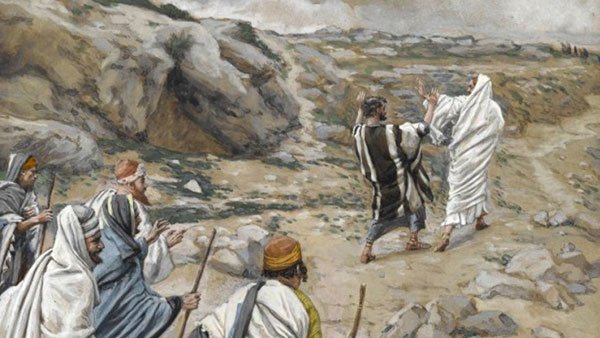
They rose up, drove him out of the town,
and led him to the brow of the hill
on which their town had been built,
to hurl him down headlong.
But Jesus passed through the midst of them and went away.
Evangelio
Lucas 4, 21-30
En aquel tiempo,
después de que Jesús leyó en la sinagoga
un pasaje del libro de Isaías, dijo:
“Hoy mismo se ha cumplido este pasaje de la Escritura
que ustedes acaban de oír”.
Todos le daban su aprobación
y admiraban la sabiduría de las palabras que salían de sus labios,
y se preguntaban: “¿No es éste el hijo de José?”
Jesús les dijo: “Seguramente me dirán aquel refrán:
`Médico, cúrate a ti mismo’ y haz aquí,
en tu propia tierra,
todos esos prodigios que hemos oído que has hecho en Cafarnaúm”.
Y añadió:
“Yo les aseguro que nadie es profeta en su tierra.
Había ciertamente en Israel muchas viudas en los tiempos de Elías,
cuando faltó la lluvia durante tres años y medio,
y hubo un hambre terrible en todo el país;
sin embargo, a ninguna de ellas fue enviado Elías,
sino a una viuda que vivía en Sarepta, ciudad de Sidón.
Había muchos leprosos en Israel, en tiempos del profeta Eliseo;
sin embargo, ninguno de ellos fue curado sino Naamán, que era de Siria”.
Al oír esto, todos los que estaban en la sinagoga se llenaron de ira,
y levantándose,
lo sacaron de la ciudad y lo llevaron hasta un barranco del monte,
sobre el que estaba construida la ciudad, para despeñarlo.
Pero él, pasando por en medio de ellos, se alejó de ahí.
Offertory Antiphon
It is good to give praise to the Lord,
and to sing to your Name, O Most High.
(Psalm 92:2)
Antífona de Ofertorio
Es bueno dar gracias al Señor,
y salmodiar a tu nombre, oh, Altísimo.
(Salmo 91, 2)
Communion Antiphon
Let your face shine on your servant.
Save me in your merciful love.
O Lord, let me never be put to shame, for I call on you.
(Psalm 31:17-18)
Communion Antiphon 2
Blessed are the poor in spirit,
for theirs is the Kingdom of Heaven.
Blessed are the meek, for they shall possess the land.
(Matthew 5:3-4)
Antífona de Comunión
Vuelve, Señor, tus ojos a tu siervo
y sálvame por tu misericordia.
A ti, Señor, me acojo, que no quede yo nunca defraudado.
(Salmo 30, 17.18)
Antífona de Comunión 2
Dichoso los pobres de espíritu,
porque de ellos es el Reino de los cielos.
Dichosos los humildes,
porque heredarán la tierra.
(Mateo 5, 3-4)
Lectionary for Mass in the Dioceses of the United States of America, volume I Copyright © 1970, 1997, 1998 Confraternity of Christian Doctrine, Inc., Washington, D.C. All rights reserved. No part of this work may be reproduced or transmitted in any form or by any means, electronic or mechanical, including photocopying, recording, or by any information storage and retrieval system, without permission in writing from the copyright owner.
© 1999 Comisión Episcopal de Pastoral Litúrgica Derechos reservados a favor de OBRA NACIONAL DE LA BUENA PRENSA, A.C. Apartado M-2181. 06000 México, D.F. Orozco y Berra 180. Santa Mariá la Ribera.
© 1970 Comisión Episcopal Española de Liturgia
© 1972 SOBICAIN. Derechos reservados.